
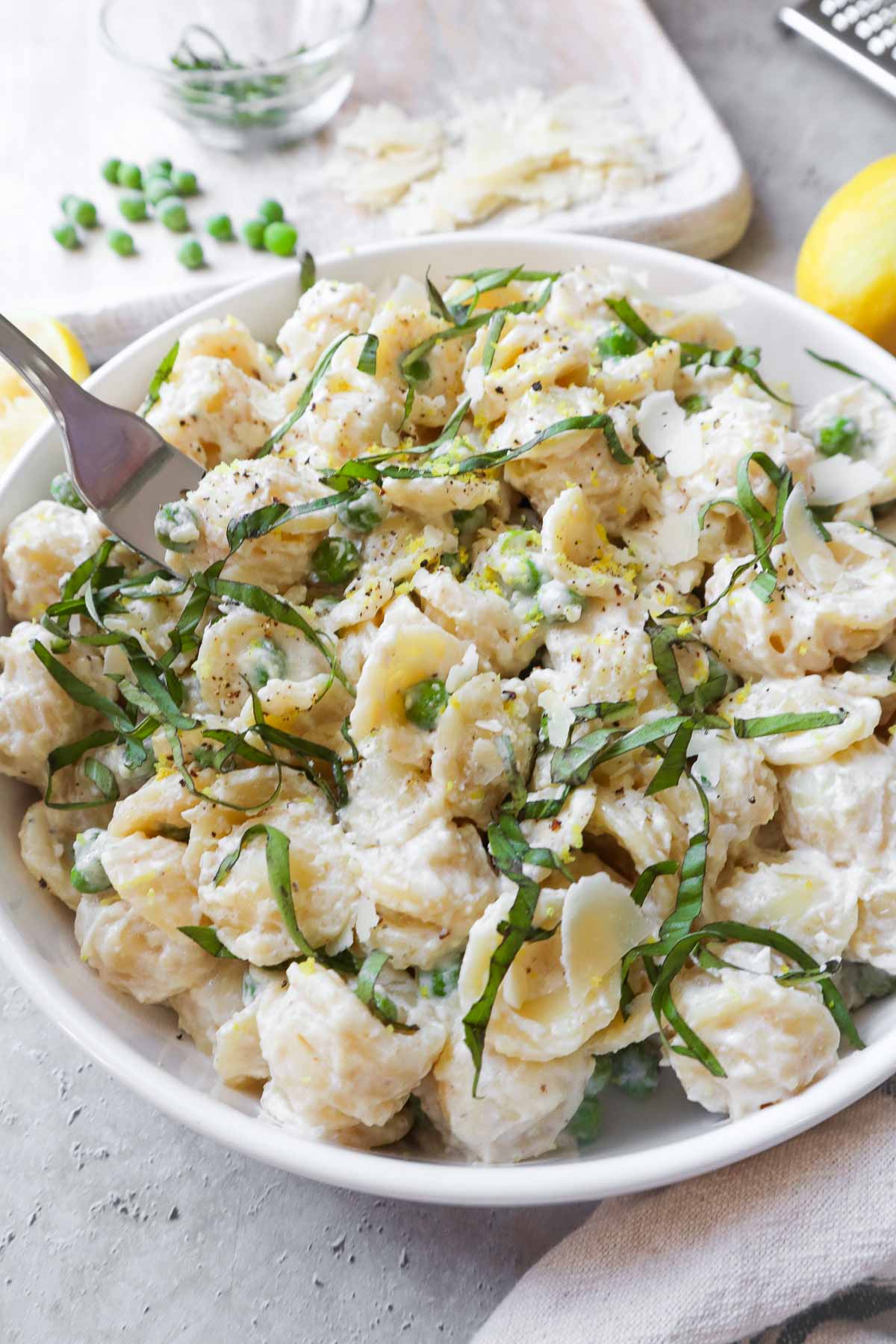
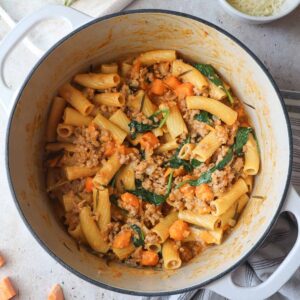
Creamy Ricotta Pasta with Peas is tossed in lemon zest, garlic, and fresh basil. A bright 20-minute one-pot spring dinner that's light, fresh, and weeknight easy.
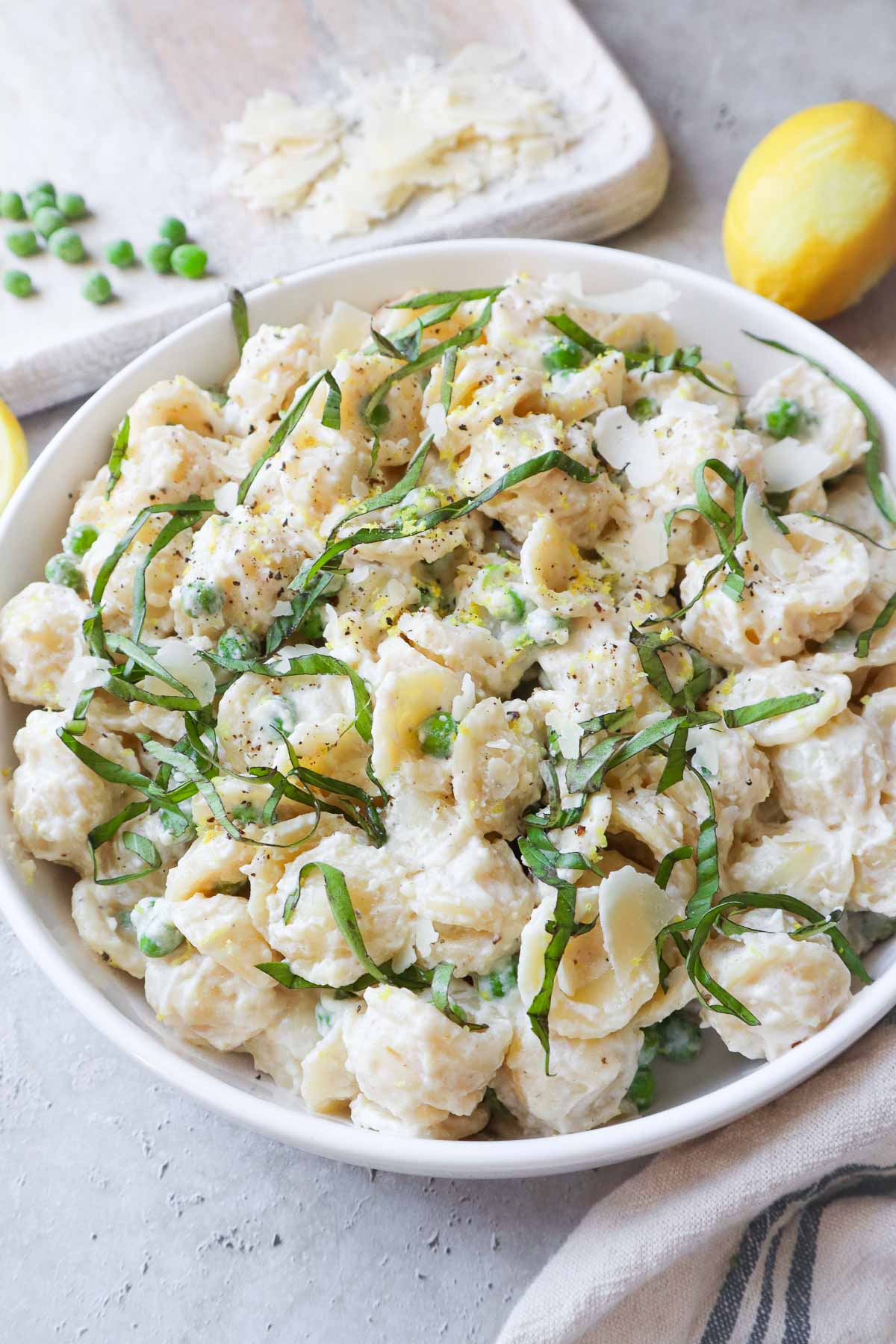
This Ricotta Pea Pasta has been my spring repeat lately. It's bright and lemony, with those sweet little pops of peas in every bite, kind of like the fresh flavor you get from our Chicken Leek Risotto with Peas.
The sauce is silky but not heavy, which matters to us because nobody wants dinner to feel like a brick. And the fact that it's on the same in under 20 minutes? That's exactly what I need when the calendar is packed with practices and everything else.
I tried this two ways, straight ricotta meets pasta water, and the classic cream boost version. Pasta water always came out with the best reviews from the family. The starchy water has a way of pulling the ricotta together into a smooth sauce that clings to every noodle. This is the method we use to make our Chicken Ricotta Pasta with Sun-dried Tomatoes, and it works well every single time.
Jump to:
- Recipe Highlights
- What Is Ricotta Pasta with Peas?
- Ingredient Notes and Substitutions
- How to Make Ricotta Pasta with Peas
- Expert Tips for Perfect Ricotta Pasta with Peas
- Must Try Ricotta Pasta Variations
- Storing, Reheating, and Freezing
- Serving Suggestions
- Common Questions
- More One-Pot Pasta Recipes Like This
- One Pot Ricotta Pasta with Peas
Recipe Highlights
- It's creamy without being too heavy.
- Works great as a side or vegetarian dinner.
- Ready in 20 minutes
- Budget friendly
What Is Ricotta Pasta with Peas?
Ricotta pasta with peas is a simple Italian pasta dish similar to Pasta e Piselli made with ricotta cheese, pasta water, and sweet peas to create a light, creamy sauce. Unlike Alfredo, the sauce relies on ricotta and starch from pasta water instead of heavy cream.
Ingredient Notes and Substitutions
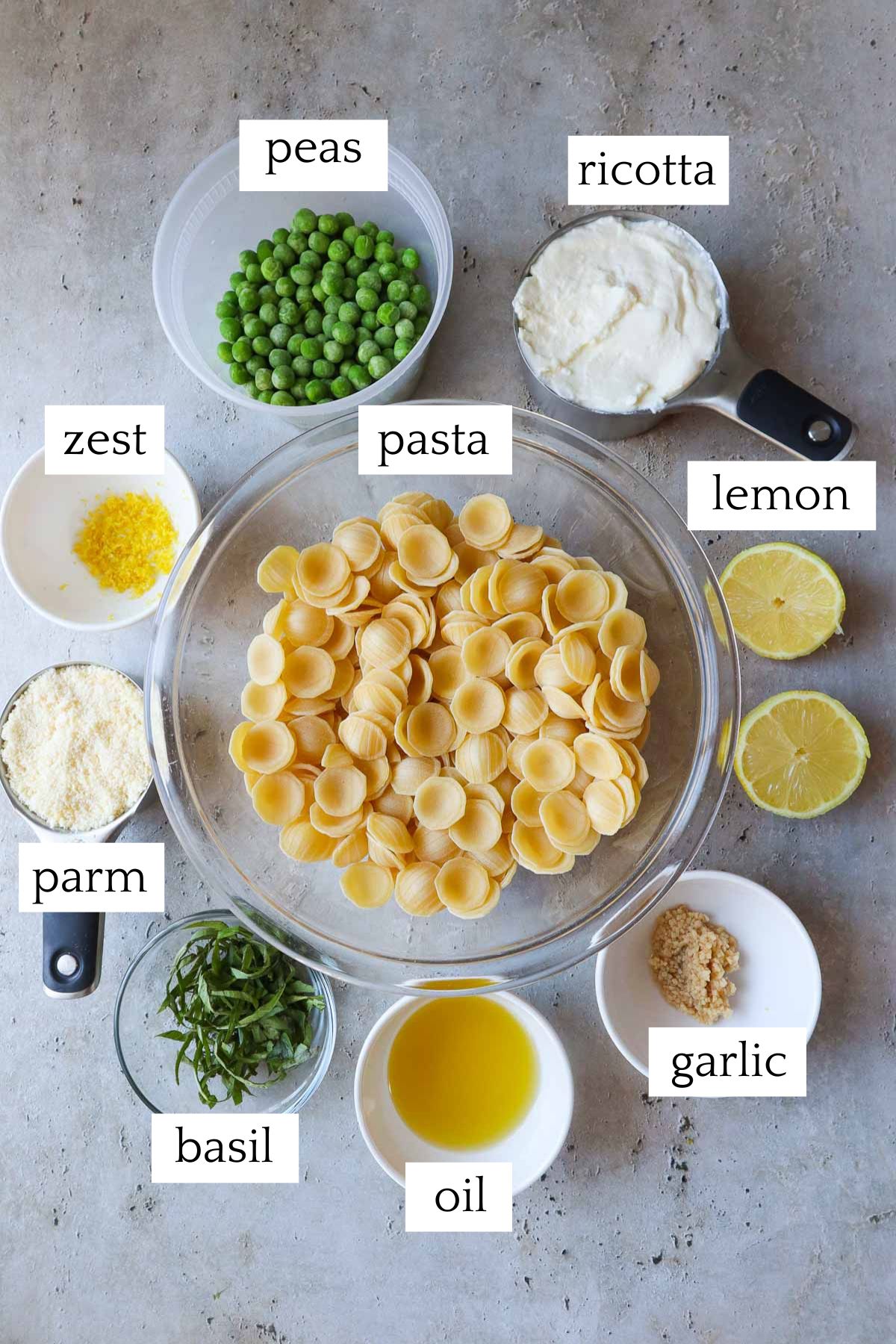
Whole Milk Ricotta: Whole milk gives the best texture. Part-skim works, but the sauce won't be as rich and can feel slightly grainy.
Peas: Frozen peas are my go-to because they're budget-friendly and available all year long. No need to thaw. Fresh peas are a great choice, but they may need to cook 1-2 minutes longer. Don't use canned peas. They'll break down and get mushy.
Pasta: Rigatoni, shells, or orecchiette are perfect for ricotta pasta because they grab onto the sauce very well.
Lemon: Using fresh lemon is a must for the same refreshing and bright flavor found in our Lemon Dill Hummus. Don't forget to zest before juicing!
See the recipe card for full information on ingredients and quantities.
How to Make Ricotta Pasta with Peas
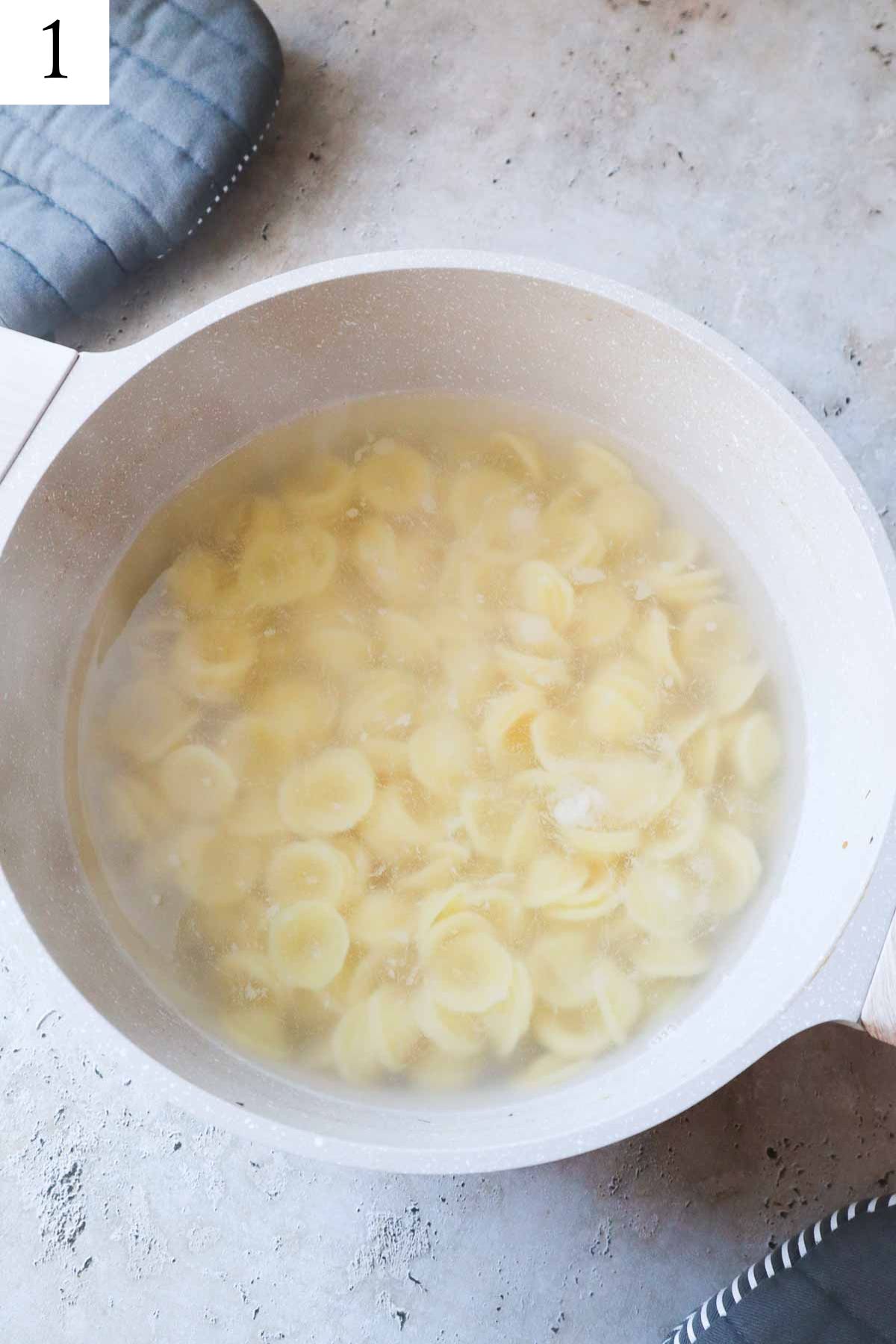
Step 1: Cook your pasta in well-salted water until al dente. Save some pasta water before draining.
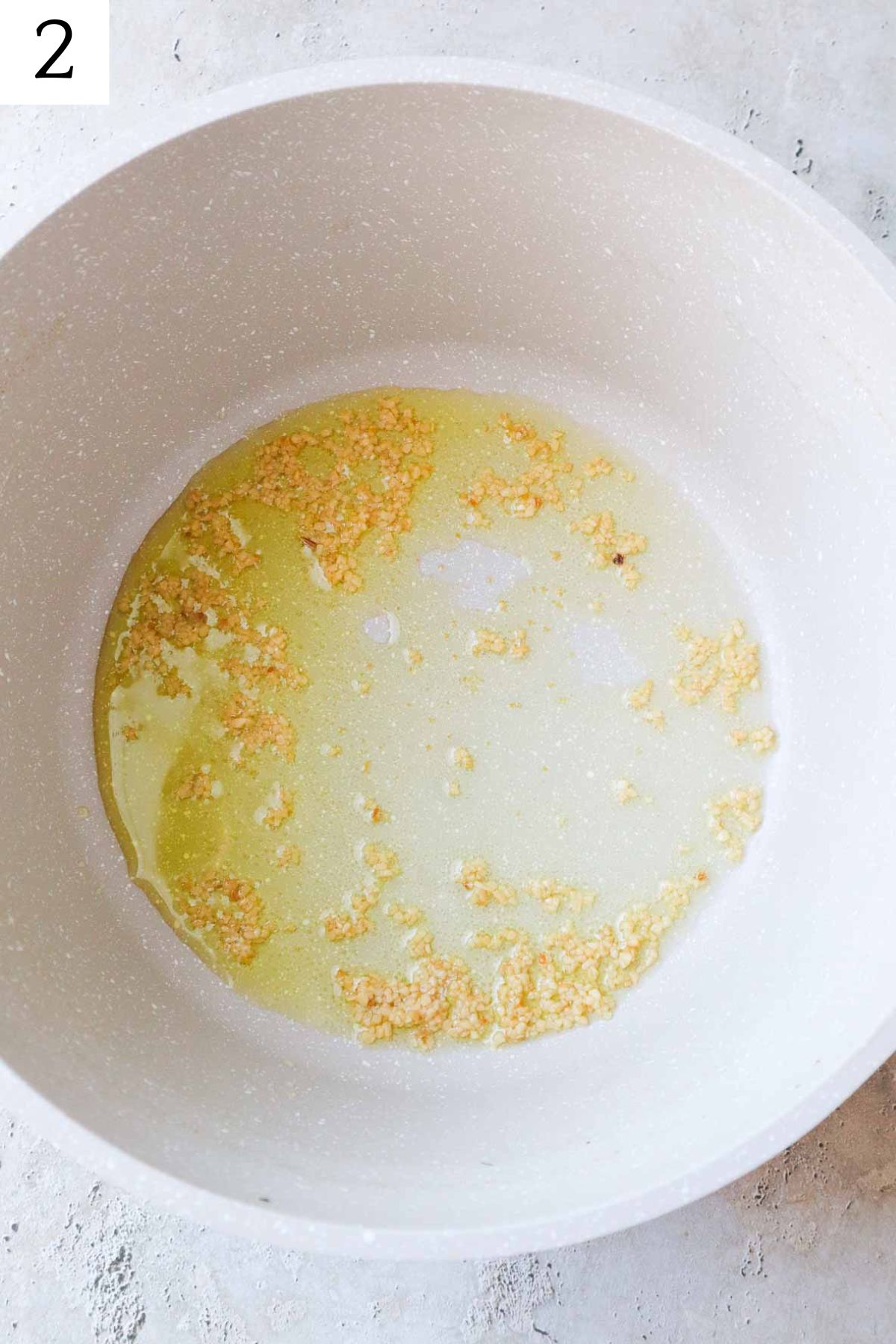
Step 2: Return the pot to the stove over medium-high heat with olive oil. Add garlic and let it cook for about 30 seconds until fragrant.
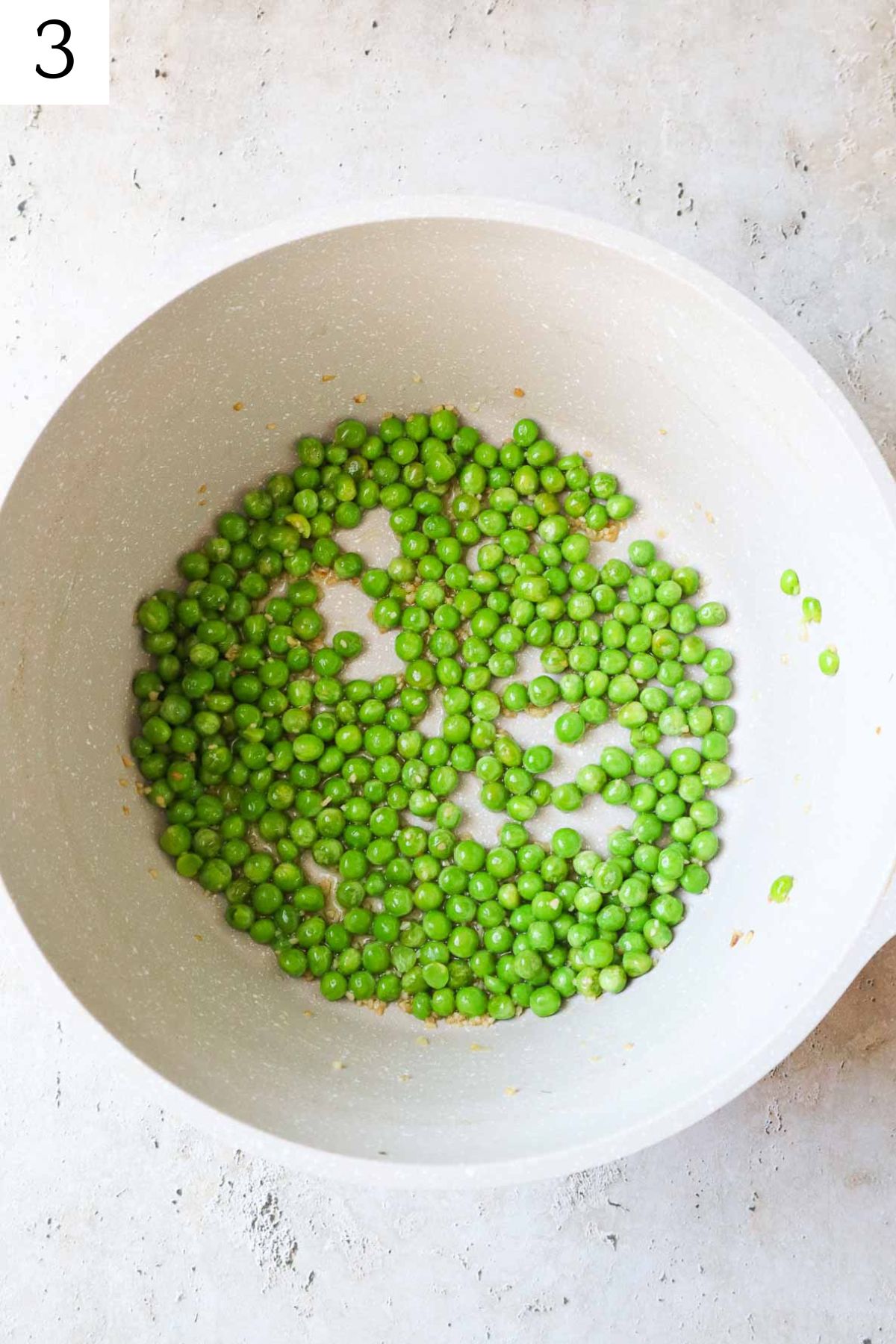
Step 3: Stir in the peas and cook until bright green. About 1-2 minutes.
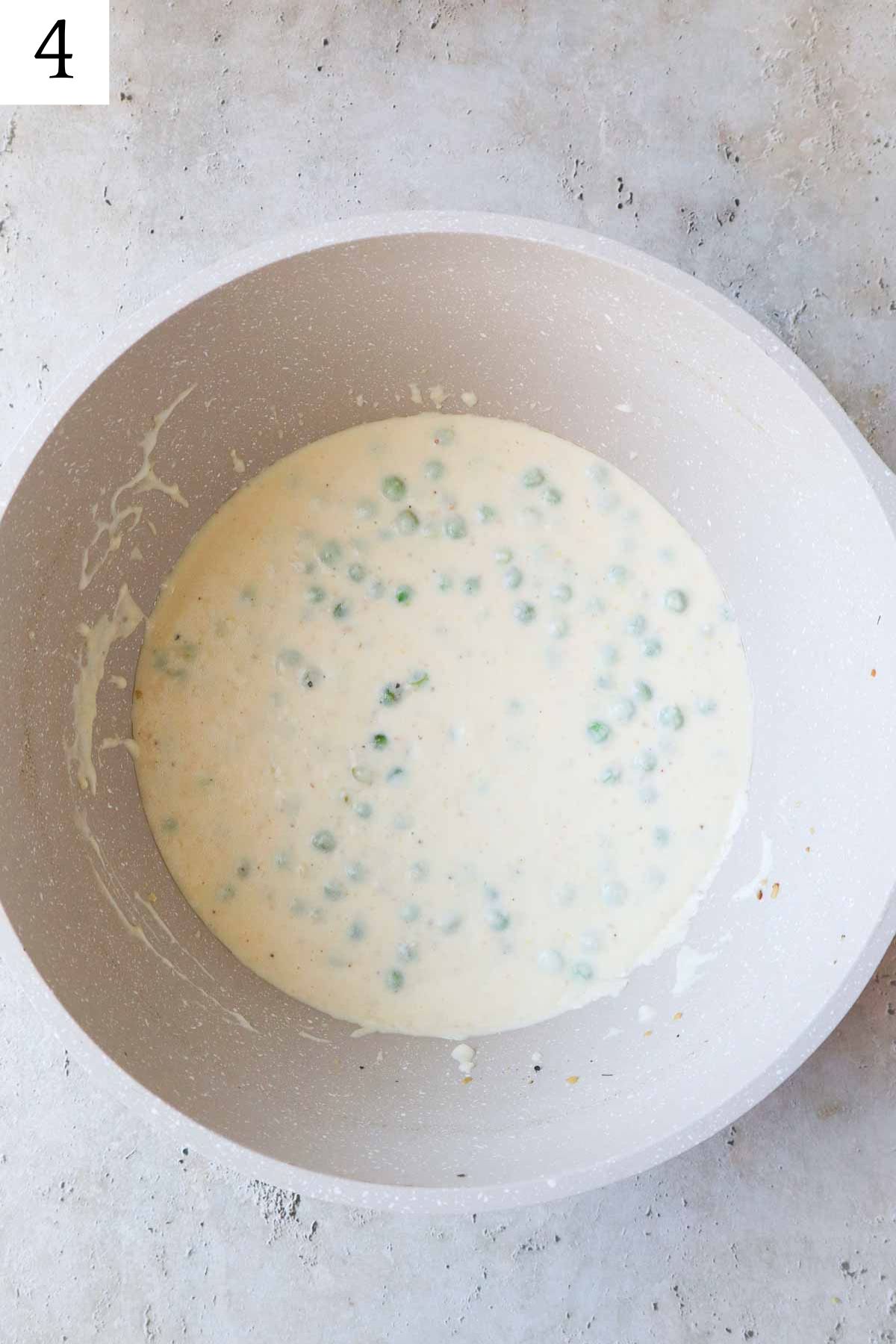
Step 4: Lower the heat or turn off completely. Stir in ricotta, lemon zest, lemon juice, and pasta water to loosen the sauce.
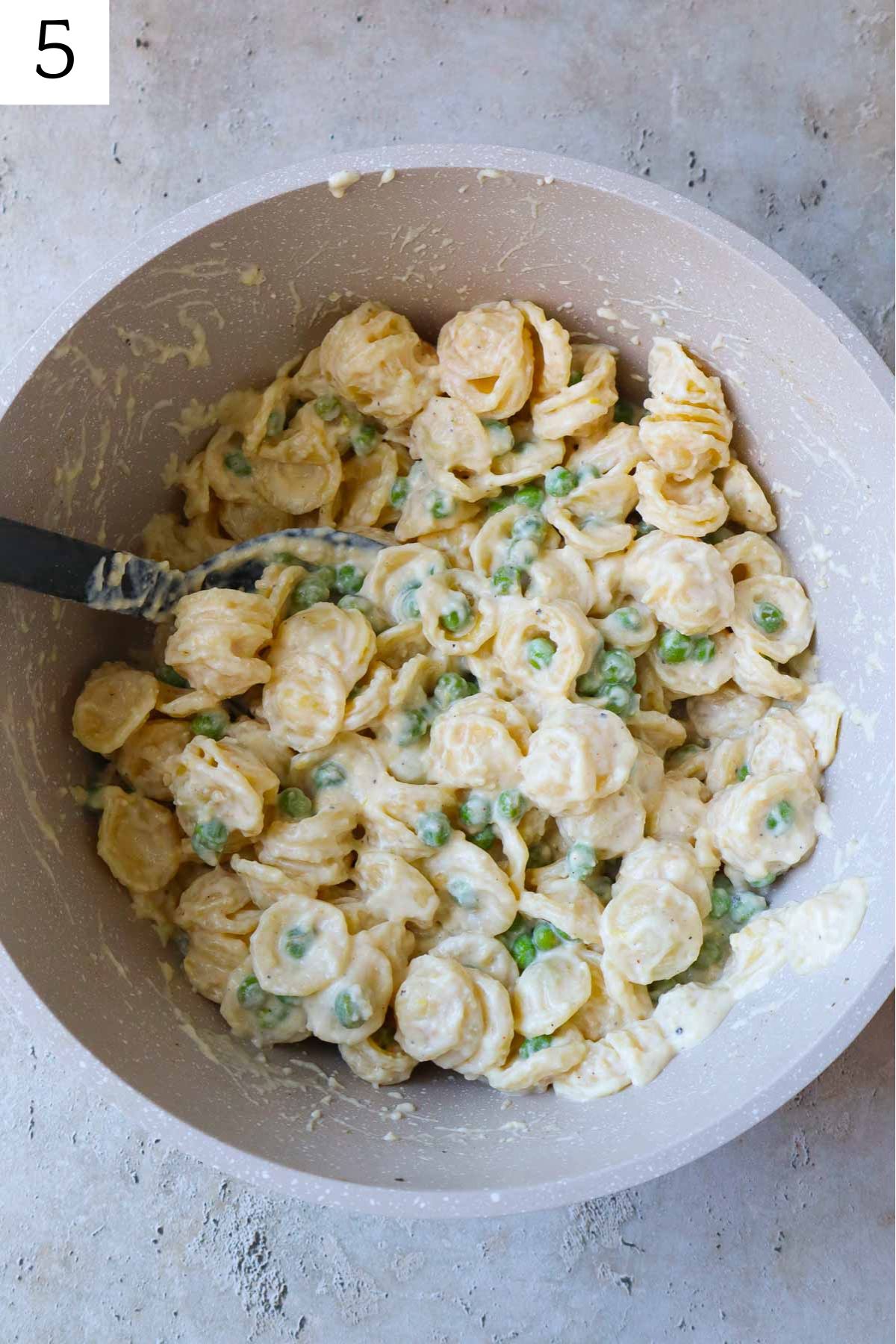
Step 5: Stir in the Parmesan cheese gently. Season with salt and pepper as needed. Add drained pasta to the skillet and toss until coated with the cheesy ricotta sauce. Add pasta water to loosen the sauce if needed. Garnish with basil and serve immediately.
See the recipe card for more details.
Expert Tips for Perfect Ricotta Pasta with Peas
- Lower the heat before adding the ricotta. High heat can make dairy tighten and turn clumpy.
- Don't overcook the peas. They can quickly go from bright green and sweet to gray and dull.
- If it dried out, add warm water or reserve pasta water to loosen it again.
- Serve immediately. Ricotta pasta thickens as it sits.
Must Try Ricotta Pasta Variations
Add Protein: Try it with crispy pancetta or bacon, rotisserie chicken, or shrimp.
More Veggies: Stir in spinach, asparagus, or zucchini to make it a full spring dinner.
Make it Lighter: Use part-skim ricotta. Just know the sauce won't be as rich. You may need a little extra pasta water to smooth it out.
Turn It Into Pasta Salad: Cool it slightly and serve at room temperature. Add extra lemon juice and a drizzle of olive oil so it stays loose.
Storing, Reheating, and Freezing
Store leftovers in an airtight container in the refrigerator for up to 3 days. Reheat with a splash of warm water before microwaving. Stir halfway through.
I don't recommend freezing since ricotta can become grainy.
Serving Suggestions
We love this paired with other Italian-inspired flavors like our Pesto Bruschetta Chicken or Creamy Chicken Piccata. I also found that it's balanced well with Apple Strawberry Salad and Butternut Beetroot and Feta Salad.
Common Questions
Usually, the pan was too hot, or the ricotta was added straight from the fridge. My tested fix is to mix the ricotta with warm water first and lower the heat before tossing.
Ricotta thickens as it sits. That's normal. Save extra pasta water and stir in a splash when reheating. Warm it gently. High heat will tighten the cheese and make it stiff.
This can happen if it's overheated or if part-skim ricotta is used. High heat tightens the proteins and breaks the smooth texture. Always lower the heat before adding the ricotta, and mix it with warm pasta water first. If it's already grainy, whisk in a few tablespoons of hot pasta water off the heat until smooth.
Yes. Lemon brightens the dish, but you can skip it or replace with a splash. of white wine vinegar or even a little Parmesan cheese for depth.
More One-Pot Pasta Recipes Like This


If you tried this Ricotta Pasta with Peas or any other recipe on my website, please leave a 🌟 star rating and let me know how it went in the 📝 comments below. Thanks for visiting!

One Pot Ricotta Pasta with Peas
Ingredients
- 8 oz pasta rigatoni, shells, or orecchiette
- 1 cup whole milk ricotta
- Zest of 1 lemon don't forget to zest before juicing
- Juice from 1 lemon
- ½ cup parmesan cheese
- 1 cup frozen peas no need to thaw
- 2 tablespoons olive oil
- 1 clove garlic minced
- Salt and pepper to taste
- Fresh basil for garnish
Instructions
- Cook the pasta in well salted water until al dente. Reserve 1 cup of pasta water before draining. Set aside.
- Return the pot back to the pan over medium high heat with olive oil. Add garlic and let cook for about 30 seconds until fragrant.
- Stir in the peas and cook until bright green. About 1-2 minutes.
- Lower the heat or turn off completely. Stir in ricotta, lemon zest, lemon juice, and pasta water to loosen the sauce.
- Stir in the parmesan cheese gently. Season with salt and pepper as needed. Add drained pasta to the skillet an toss until coated with the cheesy ricotta sauce. Add pasta water to loosen the sauce if needed.
- Garnish with basil and serve immediately.
Notes
- To avoid clumping, keep the pan from getting too hot and let the ricotta come to room temp before adding. An easy fix is to mix the ricotta with warm water first and lower the heat of the pot before adding.
- Ricotta thickens as it sits. Save some extra pasta water to revive.
- Avoid a grainy mixture by not overheating. Lower the heat before adding ricotta. If it's already grainy, whisk in a little pasta water off the heat until smooth.

Leave a Reply